
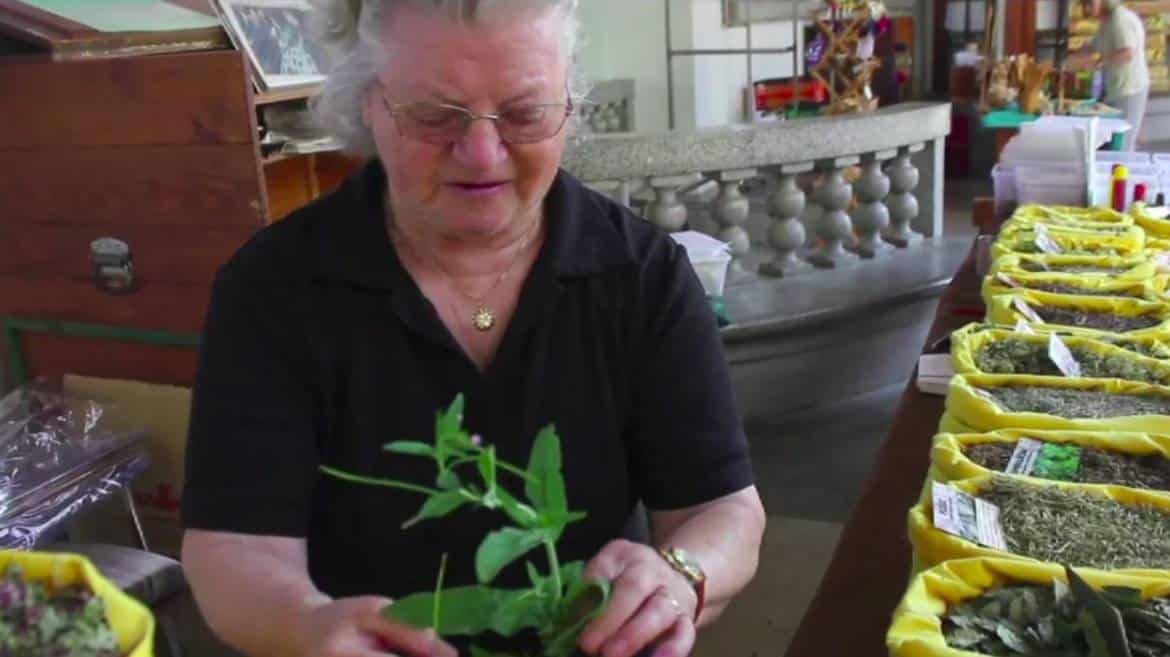
A study of herbal medicine in Slovenia. The use of herbal medicine is widespread in Slovenia, and on visits to friends in rural areas you’ll often encounter drying rooms or tables covered with leaves and flowers, the specimens gathered from gardens or the wild, to be later stored in jars and turned into teas for various ailments, or left to soak in alcohol for a certain pick-me-up.
If you don’t know anyone who can give you some of the products of such work, or lack the confidence to be your own herbalist, then you can always buy a supply of dried plant materials from a professional, like Terezija NikoliÄ who sells herbal remedies in the Ljubljana market (her stall is by the entrance to the fish market).
TO SEE OUR FULL NEWSPAPER PLEASE REGISTER HERE
[pc-pvt-content allow=”91″ warning=”1″]
While we have every respect for the empirical knowledge of grandmothers, the repositories of inherited wisdom, readers interested in a more scholarly approach to the subject might be interested in this survey study, “Folk use of medicinal plants in Karst and Gorjanci, Slovenia†(2017), written by Mateja Lumpert and Samo Kreft and published in the Journal of Ethnobiology and Ethno medicine. This interviews a total of 50 subjects, 25 from each area, and examines their use of medical plants – which ones, what parts are used, how the plants is consumed, and for what ailments.
As the abstract says: Information on the use of medicinal plants in Karst and Gorjanci is not available in the literature, but the collection of plants is still an important and widespread practice in these regions. Karst and Gorjanci are two remote regions in Slovenia that are only 120 km apart but have diff erent climates; one region is close to the Italian border, and the other is near the Croatian border… …
A total of 78 and 82 taxa were reported in Karst and Gorjanci. While the whole article is of interest, those wishing to jump to the plants in question should take a look at stinging nett les, (Urtica dioica), in Slovene kopriva, which are used as a “diuretic, to cleanse blood and body, spring and autumn cleansing, counteracts rheumatism, good for the stomach, to cleanse skin, to heal acne, laxative, treatment of diabetes, hair loss, hard skin, and tired legsâ€, and can be consumed in a variety of ways, including soup. Readers with a more statistical bent will be interested in a list of the plants used in Slovenian folk medicine as reported by at least three respondents in Karst or Gorjanci, with their frequency, rank and Smith’s salience index, where we find that elderberry (Sambucus nigra) is the most commonly used plant in both areas.
Finally, and with the warning that most species of wolf’s bane (Aconitum) are considered poisonous, we’ll note a paper with the title “Rare tradition of the folk medicinal use of Aconitum spp. is kept alive in SolÄavsko, Slovenia”, published in 2017 in the Journal of Ethnobiology and Ethno medicine by Marija PovÅ¡nar, Gordana Koželj, Samo Kreft and Mateja
Please see our January and February online edition below.
[/pc-pvt-content]
Source: Total Slovenia News



Leave a Reply